Showing posts with label plastic. Show all posts

Tuesday, July 27, 2021

Urge your Members of Congress to support the Break Free from Plastic Prevention Act

Please, reach out to your Members of Congress to support the Break Free from Plastic Prevention Act of 2021 (H.R. 2238, S.984) and to thank Rep. Grijalva for co-sponsoring the Act.

Below is the letter drafted by the head of  Sustainable Tucson's Zero Plastic Waste Team, Kevin Green. You can cut and paste your message on their website (addresses below.)

Rep. Kirkpatrick
https://kirkpatrick.house.gov/contact/email-me/
Phone: 520-881-3588

Rep. O'halleran
https://ohalleran.house.gov/zip-code-lookup?form=/contact/email
520-316-0839

Sen. Sinema
https://www.sinema.senate.gov/contact-kyrsten
(520) 639-7080

Sen. Kelly
https://www.kelly.senate.gov/
520-475-5177

To thank Rep. Grijalva for being a co-sponsor of the act:

Rep. Grijalva
https://grijalva.house.gov/contact-raul/
(520) 622-6788

Sample letter:

I am reaching out to urge you to support the Break Free from Plastic Prevention Act of 2021 (H.R. 2238, S.984). Introduced by Sen. Jeff Merkley (OR) and Rep. Alan Lowenthal (CA), this bill represents the most comprehensive set of policy solutions to the plastic pollution crisis ever introduced in the U.S. Congress.

Introduced by Sen. Jeff Merkley (OR) and Rep. Alan Lowenthal (CA), this bill represents the most comprehensive set of policy solutions to the plastic pollution crisis ever introduced in the U.S. Congress.

The United States generates more plastic waste than any country in the world. Plastic is made from fossil fuels by processes that cause air pollution and contribute to climate change. Up to 50% of plastics manufactured are for single-use purposes — used for just a few moments and then discarded. Most plastic is never recycled — over 90% of it ends up in landfills or our oceans.

Plastic pollution is inundating our communities, our waterways, and even our bodies. It is making its way into our food, drinking water, and even the air in the form of microplastics — plastic debris that breaks up into smaller and smaller particles.

Plastic contributes to climate change at every step of its life cycle, from extraction to refinement, manufacture, transportation, disposal, and waste.

The BFFPPA will tackle the exploding crisis of plastic pollution and transform waste and recycling management in the U.S. Key provisions of the bill include:
  • Phasing out unnecessary single-use plastics,
  • Establishing national recycling targets,
  • Shifting responsibility for waste management and recycling to the manufacturers and producers,
  • Establishing minimum recycled content standards,
  • Encouraging a shift to refillable and reusable alternatives,
  • Creating a moratorium on new plastic production facilities
These changes are all important to help ensure a healthy and climate resilient future.

We cannot simply recycle our way out of a crisis this massive. Corporations and plastic producers must take responsibility for the waste created by their products. We must address the problem at the source by reducing the amount of single-use plastic we use and encouraging a shift toward better and reusable materials.

Please support this national legislation that is crucial to meaningfully addressing the plastic waste problem.

Monday, March 8, 2021

Tell Legislators: Don't weaken environmental protections on plastic recycling facilities


Recycling plastics isn't the solution.  We need to reduce our use. But if we are going to recycle, it is important to have strong environmental protections in place for recycling centers. SB1156 weakens environment regulations on certain types of plastic recycling facilities.  

It is likely to go for a vote in the state legislator today (Monday, Feb. 8th). Please, call your senator now!  

SB1156 forfeiture of office; technical correction (now: solid waste; advanced recycling facilities ) is being promoted by the plastics industry and is making the rounds throughout the U.S. It seeks to masquerade the processes outlined as “advanced recycling” and part of a “circular economy,” but instead they are producing more of the same, including the production and burning of fossil fuels, as well as pyrolysis. It exempts these plastics processes, including pyrolysis and conversion of plastic to fuel, from the definition of solid waste, so they are more lightly regulated, and also includes them in the acceptable uses for grants for the Recycling Fund monies. Please call your senator and ask them to vote no. 
 
If you don't know who your Senator is, you can find out what district you are in by putting your zip code in here:  https://azredistricting.org/districtlocator/

Then look up their numbers here: https://www.azleg.gov/MemberRoster/?body=S


Learn more about our plastic problem:


LEARN ABOUT PLASTIC POLLUTION: THE PROBLEM WITH PLASTICS - Greenpeace 

Monday, May 20, 2019

ASK GROCERY STORES TO PHASE OUT SINGLE-USE PLASTIC CHECKOUT BAGS


Workers removing plastic bags from recycling machines
As some of you know, Tucson is having a recycling crisis. Because of the contamination in our recycling, it is becoming cost prohibitive to keep the program running. First, they will cut back recycling pickups to twice a month and could raise the cost from the current range of 15 cents to 45 cents per household monthly. That is particularly due to the plastic bags that people try to recycle or bag their recycling items in. Every 2-3 hours, the recycling people have to stop the machine and remove the plastic bags wrapped in the gears by hand!
It is time that we ask grocery stores to take responsibility for getting us hooked on plastic bags in the first place! 

PLEASE, TAKE A MINUTE TO ASK GROCERY STORES TO PHASE OUT
SINGLE-USE PLASTIC CHECKOUT BAGS!

Every minute, the equivalent of an entire garbage truck of plastic gets dumped into our oceans. That’s 8 MILLION tons entering our oceans each year. We have to act now.
Plastic never goes away – it breaks down, poisoning our environment and marine life. And the situation is dire: Researchers are finding plastic pollution at the deepest depths of the ocean. Vulnerable species like sea turtles and blue whales are being pushed closer to extinction. And without drastic action, by 2050, there will be more plastic in our oceans than fish. It’s a recipe for disaster of the highest magnitude.

But we can do something to stop this. Up to 80% of plastic in our oceans comes from land-based sources, including single-use plastic checkout bags: Shoppers worldwide use 500 BILLION checkout bags – and right now, we need your help to pressure corporations to take action and phase-out these single-use plastics. If big grocery chains take action, they can make a huge dent in this crisis.

We’ve already started to make progress: The nation’s largest grocery chain has already committed to phasing out plastic checkout bags. But to truly make a difference, we need grassroots advocates to demand their competitors do the same. Can we count on you to add your name now to demand Albertson’s and Safeway end single-use plastic checkout bags in their stores? The health and vitality of our oceans depend on it – we can’t afford to wait a single moment. Sign the petition and help protect our marine life from deadly plastic pollution!
Petition sponsors:

Clean Water Action
California League of Conservation voters
Daily Kos
Friends of the Earth Action
Plastic Pollution Coalition
Sierra Club

Wednesday, April 17, 2019

Support the plastic protesters at Nestle's headquarters. Contact the company now!

Outside Nestlé’s United States corporate headquarters with your message AND a giant plastic monster!
Yesterday, Greenpeace activists showed up at other Nestlé offices all over the world. We need to strike while the iron is hot. Make your voice heard by calling Nestlé right now at 1-888-918-6672. Let’s make sure this is a day Nestlé executives never forget.

In 2018 alone, Nestlé was responsible for creating nearly 4 billion pounds of single-use plastic packaging that in many cases is not recyclable or reusable — instead it will end up as waste forever haunting our planet!

Will you help us tell Nestlé how dire the plastic pollution crisis truly is? Call Nestlé right this moment at 1-888-918-6672 and tell them they must phase out their reliance on single-use plastic packaging, and move to refillable and reusable options.

I cannot bear to see another headline about communities overrun by the global waste trade – or another dead whale with a gut full of plastic. So my friends and I called out Nestlé at its office with a giant monster made with discarded Nestlé packaging. If you feel like I do, please join us by calling out Nestlé over the phones.

Calling is easy, takes less than two minutes, and is one of the best ways to make sure Nestlé is listening. Just follow these simple steps:
  1. Dial 1-888-918-6672.
  2. Listen to a short message from Greenpeace. We’ll then patch you through to Nestlé’s customer service line.
  3. When you’re connected, be polite and say what you think about Nestlé’s plastic packaging. Here is a suggested script:
Hi, my name is ___________and I’m calling from CITY, STATE. I’m very concerned by the massive amount of single-use plastic pollution and Nestlé is one of the largest global corporations that relies heavily on such packaging. I would like Nestlé to be an industry leader and phase out single-use plastic, while innovating bold, new solutions like refillable and reusable packaging. Thank you!

You can also send a message demanding an end to single-use plastic on Nestle's Facebook

Not on Facebook? No problem, you can send a message on Instagram or Twitter.

Nestlé needs to hear from you right now. You’ve already joined millions signing petitions demanding an end to its single-use plastic and spreading the word on social media. They know they’ve created a problem, but they don’t want to be the ones to solve it. The solution, however, is in their hands, and the time is now. Nestlé must make the switch to systems of reuse. 

- Kate Melges, Greenpeace USA

Tuesday, March 26, 2019

Sign the petition: Tell Nestlé to stop producing single-use plastic


Plastic pollution is jeopardizing human health and harming marine animals like whales and sea turtles at alarming rates.
We cannot recycle our way out of this crisis. Over 90% of plastics are not recycled. Communities in Southeast Asia are used as dumping ground through the global waste trade. We have to hold brands accountable and demand alternatives to cheap throwaway plastic packaging.
Recent cleanups and audits of plastic waste have revealed that Nestlé is one of the worst plastic polluters. Nestlé sells a billion products a day with 98% of them wrapped in single-use packaging.
Nestlé must stop endangering our oceans, communities, and wildlife around the world.
Sign the petition to tell Nestlé: Stop producing single-use plastic and immediately start shifting toward refillable and reusable products!
Thanks to pressure from the global Break Free From Plastic movement, Nestlé has finally acknowledged the plastic pollution crisis. But the company has yet to take meaningful action and continues to churn out throwaway plastics that will exist in our world for lifetimes. No material used for momentary convenience should have an impact that severe.
Our Message to U. Mark Schneider, CEO of Nestlé:
I am calling on you to take meaningful action to address the plastic pollution crisis and immediately start shifting toward systems of refill and reuse. Nestlé must do more than acknowledge the problem with vague plans to phase out single-use plastics in a minuscule portion of its product lines. As a leader in the industry it must move with the urgency and scale needed to protect communities, oceans and wildlife. We will no longer jeopardize our environment for the sake of packaging.
Participating Organizations:
Climate Hawks Vote
Climate Parents
Daily Kos
Friends of the Earth Action
GAIA
Greenpeace
Plastic Pollution Coalition
Stand

More Information:

These 5 Marine Animals Are Dying Because of Our Plastic Trash … Here’s How We Can Help

#CrushPlastic Movement

Tuesday, February 12, 2019

Support HB 2395 to Save Local Recycling, the Environment, and Our Economy

Think this view will attract tourists? 

This has been a year of action for Sustainable Tucson. We committed to including an action with every educational meeting.

At our Recycling and Beyond meeting, we not only learned about the new rules for recycling and why they are important, but we also formed a Zero Plastic Waste team. Here is a recording of our first meeting. But it is really a working group. We already wrote and promoted the blog, "Lessons from Our Recycling Queen."  (I suggest everyone read and learn it. Our bad recycling is making it cost prohibitive to have a recycling program in Tucson.) We just finished drafting a one-sheet  (two sides) about HB2395 - which repeals the law that makes it illegal for towns like Bisbee to ban plastic grocery bags and other packaging. The one-sheet will be included in attendees' folders for Environmental Day at the Capitol and they will be handed to our state legislators.


Even if you can't attend Environmental Day at the Capitol, you can still help out by e-mailing your state representatives and asking them to support HB2395. 

Feel free to attach a link to the one-sheet to your e-mail: 


And here is the link to the actual bill,  HB2395, that repeals ARS 9-500.38 and 11-269.16:


To find out who your Representative is, just find your district and use that to look up your Rep.

If you haven't already, you might wanna go ahead and sign up for Request to Speak. I will be posting opportunities to weigh in on this bill when it gets into committee. 

----

Support HB 2395 to Save Local Recycling, the Environment, and Our Economy

A Local Solution Thwarted by State Government

The most recent visitors study estimated that tourism brought nearly $280 million per year of revenue to businesses in Cochise County. In an effort to make Bisbee more attractive to tourists, the city passed an ordinance in 2012 banning single-use plastic bags, becoming the first city in Arizona to do so. The mayor of Bisbee, David M. Smith, claimed that before the ordinance was enacted, plastic bags sullied the street, helicoptered through the air, and draped over cactuses. Mayor Smith said that the ban “made a huge difference” and that most residents were “thrilled” by the ban. Opponents of the ban on plastic bags, including Sen. Warren Petersen, claimed that the government should not be micromanaging what types of bags consumers used. Thus, in reaction to this bag ban, legislators passed a law (ARS 9-500.38 and 11-269.16) that prohibits local city and county governments from enacting bans on “auxiliary containers”—in other words, plastic bags. Bisbee was forced to repeal their ordinance banning plastic bags or lose nearly two million dollars in state funding.

House Bill 2395, which has been sponsored by Rep. Kirsten Engel, Rep. Sally Gonzales, and Sen. Juan Mendez, calls for the repeal of the portions of Arizona Law that prohibit local city and county governments from enacting bans on auxiliary containers. The bill does not itself institute a ban on plastic bags; however, it allows communities to decide at the local level whether they wish to ban them. Now while some legislators may believe that plastic bags are innocuous and that preventing their use is “micromanaging,” the effects of plastic bag contamination on our local recycling efforts are substantial and preventing local solutions is costly.

Plastic bags getting caught in machinery makes it cost prohibitive to recycle in Tucson.

Contamination Costly to Recycling Facilities:
  • Material Recovery Facilities (MRFs) are not equipped to handle plastic bags, which get tangled in the recycling sorting equipment. Plastic bag contamination requires machinery to be shut down every three hours for cleaning, which wastes workers’ time and taxpayers’ money. Tucson’s recycling program had a deficit of $17,000 in FY 2018 and a projected deficit of $900,000 for FY 2019. 
  • The City of Phoenix estimates that clearing plastic bags from recycling equipment costs nearly $1 million dollars in lost time annually. 
Plastic Contaminates Our Food and Water Supply

Single use plastic bags from grocery stores present a myriad of issues for our environment. Hundreds of millions of plastic bags make it into landfills and oceans every year. It is estimated that by 2050 there will be more pieces of plastic in the ocean than there are fish. Plastic bags don’t decompose like plant material. Instead they photodegrade which means they just break down into smaller pieces of plastic. These smaller pieces of plastic serve as a kind of magnet that absorb toxins. Those toxins can then be transferred into animals that eat the debris, meaning that they can eventually end up in our food supply and ultimately in our bodies.

Bag Bans can be Effective

There is significant evidence that bans on plastic bags can be effective. In San Jose, Santa Monica, and LA County, bans resulted in huge increases in people using reusable bags (increase from 5% to 45%) or going without a bag (increase from 17% to 40%). This behavioral shift resulted in these municipalities avoiding the use of hundreds of millions of single use plastic bags. Studies showed that “[l]ocal economies are not negatively impacted in the long run.”

Please Support HB2395 

Local governments have been working hard with non-profit organizations, city waste-management agencies, businesses, college and high school students, and citizen volunteers to find ways to eliminate plastic bags from the waste stream. This issue requires consideration of bans, fees, and/or improved recycling efforts by local participants. ARS 9-500.38 and 11-269.16 significantly interferes with these efforts. Please support HB 2395 so that municipalities can continue developing solutions in concert with local businesses, residents, and others.

Saturday, December 15, 2018

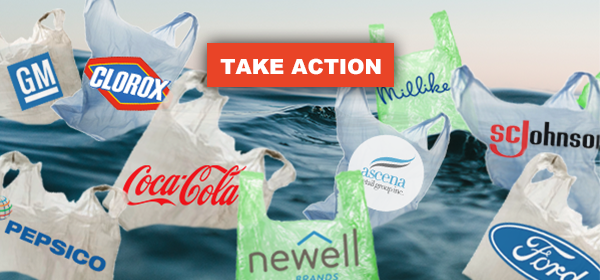
Demand companies hold the Plastic Industry Association responsible for their polluting practices

Plastic waste is filling our waterways and destroying our ecosystems. Yet the Plastic Industry Association is working to overturn local ordinances passed to fight plastic pollution. Put a stop to it!

Rather than address this problem, the Plastic Industry Association is working diligently to keep us reliant on disposable plastic products and these companies are supporting their efforts.

Burt's Bees, Ann Taylor, PepsiCo...
  • Ascena Retail Group -- apparel retailer (owner of Ann Taylor, LOFT, Justice)
  • Clorox -- consumer products (owner of Burt’s Bees and Britta)
  • Coca-Cola -- food and beverage products
  • PepsiCo -- food and beverage products
  • General Motors -- automotive products
  • Ford Motor Company -- automotive products
  • Milliken -- textile products
  • Newell Rubbermaid -- consumer products
  • SC Johnson -- consumer products
Each of these companies has pledged to make protecting our environment a priority, yet they're actively funding efforts that will expand the growing crisis of plastic trash filling our oceans and destroying marine ecosystems.1,2 

Demand companies hold the Plastic Industry Association responsible for their polluting practices.

Every minute, the equivalent of an entire garbage truck of plastic gets dumped into our oceans.3 In the United States, stores distribute 100 billion single-use plastic bags per year, many of which end up in our waterways.4

Rather than address this problem, the Plastic Industry Association is working diligently to keep us reliant on disposable plastic products, such as straws, bags, and Styrofoam containers -- known as single-use plastics.

Demand companies hold the Plastic Industry Association responsible for their polluting practices.

Fortunately for our planet, local communities across the nation are taking action.

Nearly 350 cities and towns have enacted local ordinances on plastics, such as plastic bag fees or single-use bag bans.5 These community-driven actions have been shown to keep plastic out of our oceans and litter off of our streets.6

But the plastic industry -- which is supported by member companies like Clorox, Coca-Cola, Ford Motors and others -- is spending big to thwart local work to reduce plastic pollution.7

Speak up to stop the plastic industry’s selfish attack on our oceans!

With the help of the American Legislative Exchange Council's (ALEC) draft legislation,8 the industry association has successfully banned plastic bag ordinances in 10 states -- where 70 million Americans live -- so local communities aren’t allowed to reduce plastic litter and environmental pollution.

These common household brands are actively supporting these efforts by funding the plastic industry.

Take action to demand nine major companies withdraw their support from an industry association that is actively promoting plastic bag pollution.

Some businesses have shown leadership, and their actions are true to their corporate values: Becton Dickinson, a medical technology firm, recently left the plastic industry after learning of their lobbying efforts on local plastic ordinances.9

If companies stop supporting Big Plastics as members, the industry will lose power. It's time for these companies to respect our local rights to protect and preserve our environment.

Do you agree?


- The SierraRise Team

References:
1. "Brand Owners Council," Plastic Industry Association, January 2017
2. "Better Industry. Better World," Plastic Industry Association, July 2017
3. James Pennington, "Every Minute One Garbage Truck of Plastic Is Dumped into Our Oceans. This Has to Stop," World Economic Forum, October 27, 2016.
4. "Plastic Bag Fact Sheet," Earth Policy Institute, October 2014.
5. Trevor Nace, "Here's a List of Every City in the US to Ban Plastic Bags, Will Your City Be Next?," Fobes, September 20, 2018.
6. Lorraine Chow, "Plastic Bag Bans Actually Work, Study of European Waters Shows," Ecowatch, April 5, 2018.
7. Justin Fay, "Pulling Back the Curtain: The American Progressive Bag Alliance," Minnesota Sierra Club, March 14, 2017.
8. "Act to Establish Statewide Uniformity for Auxiliary Container Regulations," American Legislative Exchange Council, 2017.
9. Steve Toloken, "Green Investors Push Plastic Industry on Bag Ban Policy" Plastic News, November 5,

Thursday, November 1, 2018

Turn up the heat on Albertsons! Tell them to end throwaway plastic!


The plastic-free movement is gaining momentum!   Nearly two and a half million people around the globe have joined you in telling corporations to stop producing throwaway plastic.

The millions of metric tons of plastic that enter our ocean each year are enough to cover every foot of coastline in the world!1 And that’s just a fraction of the total plastic production — which is set to dramatically increase if we don’t demand change now!

Now it's time to focus that energy on supermarkets. Kroger, the nation’s largest supermarket chain, has pledged to phase-out single-use plastic bags. By its count, Kroger uses about 6 billion plastic bags a year. Supermarkets like Kroger are hearing the message from concerned citizens like you all over the world to get rid of single-use plastic!

But we’re just getting started! We’re part of a coalition asking Albertsons Companies, another large supermarket chain (and owner of Safeway, Vons, Jewel-Osco, and many other supermarket chains), to commit to phasing-out plastic bags. If Albertsons joins Kroger, we can eliminate an additional 3 billion plastic bags every year!

Sign our joint petition: Urge Albertsons to eliminate single-use plastics in its stores!

Our message to Albertsons is simple, but powerful: plastic bags are used for just a few minutes, but pollute our environment, wildlife, and oceans for a lifetime. Recycling alone will never be enough to solve the plastic pollution crisis — we need Albertsons and other companies to stop forcing plastic onto consumers like you and me. Albertsons can follow Kroger's lead by banning single-use plastic bags, but must go even further and commit to phasing out all single-use plastics in its stores nationwide!

Over the last several months, we have seen a surge of awareness about the impacts of throwaway plastic. Every week there are announcements from airlines, universities, towns, and even whole countries committing to phasing out single-use plastics. Change is possible, and it’s happening before our very eyes. This is why it’s so important to keep the momentum going and call on Albertsons to join the growing trend.

Tell Albertsons to be on the right side of change and demand it joins Kroger in phasing-out plastic bags!

- Natalie Nava, Plastics Project Leader, Greenpeace USA

[1] sciencemag.org/news/2015/02/here-s-how-much-plastic-enters-ocean-each-year


Please, consider adding a paragraph explaining how one use plastic effects you and your town. That way your comment won't be disregarded as a form letter.

Here is the personal message I added - to be considered an example.

I live in Tucson. Arizona. We are a tourist town. But how can we continue to attract tourists if ugly plastic trash lines our city streets? Now China has refused to take our recyclables. One of the reasons is because plastic grocery bags get caught in their machines - making it too costly. Our recycling company wants to cut back our service because of the cost. (2)
 
Please, take steps to educate your customers about one use plastic and eventually phase them out. 

(2)  Arizona Daily Star article: Making Tucson's recycling program profitable, successful

#nosingleuseplastic 

Saturday, October 27, 2018

Tell Safeway/Albertsons: lose the plastic bags!


Do you ever shop at Albertsons, Safeway, ACME, Jewel-Osco, or Shaws?

These stores and others are owned by Albertsons Companies LLC, the nation's second-largest grocery chain.1 
If Albertsons follows the lead of Krogers (the nation's largest chain) and bans single-use plastic, we could keep billions of bags out of our oceans.

Most of the plastic produced in the United States is made from natural gas.2 The continued proliferation of disposable plastic bags, straws, and soda bottles creates an incentive to tear up our landscapes with dirty and dangerous fracking operations -- all to create products made to last forever, but be used only once.

The good news?

Retailers have a huge opportunity to help eliminate plastic waste. If Albertsons took action, based on sales, they could eliminate an estimated 3 billion bags per year.

How many of the 3 billion bags end up here?

Albertsons says they still carry plastic bags because they offer recycling as an option, but only 9 percent of plastics are ever recycled.3 Instead, most of this waste ends up in our backyards, oceans, and even our beer!4

Will you tell Albertsons CEO Robert G. Miller that, as customers, we want them to be a part of the solution?

We know that companies can do this. Just a few weeks ago Kroger -- the only U.S. grocery chain larger than Albertsons -- committed to phasing out bags and other single-use plastics as a part of their zero-waste commitment. If we can get the two largest grocery chains in the United States to eliminate the wasteful distribution of single-use plastics, we can create a domino effect across the market.

Plastic pollution is a problem we cannot ignore; giant plastic islands are floating around our oceans, acting as a trap for fish and sea animals. And our plastic use is growing so rapidly it's estimated that, by weight, there will be more plastic in our oceans than fish by 2050.5

If we work together, we can reduce fracking AND stop plastic waste from suffocating our waterways, wildlife, and environment.

Will you speak up?

- The SierraRise team

References
1. "Albertsons, About Us," accessed September 20, 2018, Albertsons.
2. Thomas Kevin Swift, et al., "The Rising Competitive Advantage of U.S. Plastics," May 2015, American Chemistry Council.
3. Laura Parker, "A Whopping 91% of Plastic Isn't Recycled," July 19, 2017, National Geographic.
4. Mary Kosuth, et al., "Anthropogenic Contamination of Tap Water, Beer, and Sea Salt," April 11, 2018, PLOS ONE.
5. "The New Plastic Economy," January 2016, Ellen MacArthur Foundation.

Other Sponsors:
- Friends of the Earth Action
- Climate Hawks Vote
- Greenpeace USA
- Plastic Pollution Coalition

Wednesday, January 10, 2018

Add your name to email to Coke's CEO James Quincey and insist that The Coca-Cola Company reduce single-use plastic bottles and find new packaging materials!


The equivalent of a truckload of plastic trash is entering our oceans every minute, fouling marine habitats and poisoning wildlife.

Coca-Cola is using one-third more single-use plastic bottles than it was ten years ago. We have to make the company change direction.

Add your name to automatically send an email to Coke's CEO James Quincey and insist that The Coca-Cola Company reduce single-use plastic bottles and find new packaging materials!

Actor/Director Bonnie Wright shared:

I’m in Atlanta and I just delivered the message of over 585,000 petition signers to Coca-Cola’s HQ, their team will finalize the details of a new sustainable packaging plan this month.

We have an opportunity in the coming days to show Coca-Cola's executives how many of us want them to take action to stop their bottles and plastic packaging from polluting our oceans and harming wildlife.

So far over 580,000 people around the world have signed the petition — please will you add your name?

Coke is not the only company producing plastic bottles — but as the biggest soft drinks producer in the world, they're in the unique position to take the lead and set new standards for the whole industry.

That's why from Africa to Australia, Greenpeace supporters are calling for Coke's global CEO to take action now.

- Bonnie Wright
Actor, Director and Greenpeace Supporter

Tuesday, April 18, 2017

Petition Coca Cola to use recycled plastic.


According to Greenpeace, by 2050 there will be more plastic per lb in our oceans than fish! That jaw-dropping statistic is due in large part to plastic soda bottles produced en masse for companies like Coca Cola. As the world's largest beverage producer and one of the world's largest purchasers of plastic bottles it is up to them to set a new standard and lead the industry to find a solution to the plastic pollution that is clogging our oceans.

We all know recycled plastic exists and currently Coca Cola bottles are recyclable but that doesn't mean that Coca Cola uses recycled plastic to bottle their soft drinks. Coca Cola sells around 108 to 128 billion plastic bottles every year but only a fraction of them are made out of recycled plastic. This is unacceptable.

Coca Cola needs to be the industry standard and commit to using more recycled plastic in their to bottle their drinks. This would keep more of the material out of landfills and our oceans and incentivize plastic recycling industry.

Let's ask Coca Cola to be the lead the way and publicly pledge to set global benchmarks to reduce its use of un-recycled plastic.
Our oceans are already clogged with plastic, putting the health of ocean life at risk. Whales, dolphins, schools of fish, corals and the rest of the ocean's vast biodiversity are being choked out by plastic pollution. And in large part it's because of plastic bottles produced en masse for companies like Coca-Cola.

If we don't act now, then by 2050, there will be more plastic per pound in our oceans than fish.

There is no excuse for Coca-Cola to dismiss their responsibility in cleaning up plastic pollution. As the largest beverage company in the world, Coca-Cola should be setting the trend to curb the amount of plastic that ends up in oceans. We need to let the company know that they can't go on with business as usual.

Please sign the petition to Coca-Cola's CEO and their Senior Director of Environment and Sustainability. They must commit to using more recycled plastic to produce their bottled drinks.

Thank you,
Alex B.
The Care2 Petitions Team